[traduzione italiana]
The Secret of Roan Inish è la trasposizione cinematografica del romanzo “Il segreto di Ron Mor Skerry” di Rosalie K. Fry (1959).
Si racconta di un legame di sangue tra una comunità familiare dell’isola e le selkie.
La versione del film è abbastanza fedele al romanzo, ma traspone la storia dalle isole della Scozia all’Irlanda, paesi che conservano ancora le stesse storie leggendarie sui mutaforma acquatici.
Ecco come Tadgh Conneelly, un parente di Fiona le racconta la leggenda della Selkie: “molte generazioni prima Liam Conneelly prese per moglie un essere per metà donna e per metà foca. Ebbero molti figli e li allevarono utilizzando una culla di legno anche usata per Jamie [il fratellino di Fiona scomparso] che in quella culla fu portato via dal mare“
[English translation]
The Secret of Roan Inish is the cinematic transposition of the novel “Secret of the Ron Mor Skerry” by Rosalie K. Fry (1959): it tells of a blood bond between a family community of the island and the selkies.
The version of the film is fairly faithful to the novel, but it transposes the story from the islands of Scotland to Ireland, both countries that still retain the same legendary tales about aquatic shapeshifters.
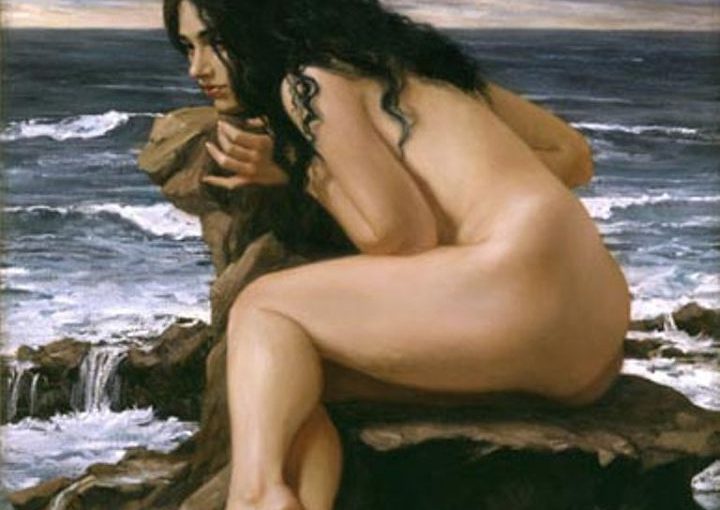
Selkie Song (An Mhaighdean Mhara)
La colonna sonora di The Secret of Roan Inish a cura di Mason Daring accosta brani tradizionali a composizioni dell’autore, in particolare Selkie Song è tratto da un tradizionale del Donegal dal titolo in gaelico “An Mhaighdean Mhara“.
The soundtrack by Mason Daring combines traditional pieces with compositions by the author, in particular “Selkie Song” is taken from a traditional Donegal song in Gaelic entitled “An Mhaighdean Mhara“.
I
Is cosuil gura bheath tu, No do rugadh tu an gcrann.
Ta an sneachta go freasach Fa a bhialainn ann.
Do shiuil bi deitil (1), Is do bhealain samh,
Suid thugaibh mEire chinnle (2), Is e an Eire naomh (3).
II
Mathairin mhilis, A duirt Maire Bhain,
Ar bharr na dtoinnti, Is ar bhruach na tra.
Mathair an bharr, Mo mhathair in ard,
Suid thugaibh mEire chinnle, Is e an Eire naomh.
III
Taimse tuirseach, Agus beidh go neal,
Mo bha ar a bhruinne, Is mo phadraic ban.
Ar bharr na dtoinnti, Is ar bhruach na tra,
Suid thugaibh mEire chinnle, Is e an Eire naomh.
Traduzione italiana Cattia Salto
I
Sembra che ti strugga
e abbia perso il buon umore.
La neve si accumula
all’imboccatura del mare
i tuoi riccioli biondi
e la tua dolce boccuccia
ecco Mary Kenny
che nuota nell’oceano
II
“Cara Madre -grida la bionda Maria
sulla cresta delle onde
e l’imboccatura della spiaggia-
Fanciulla del mare
mia nobile madre”
ecco Mary Kenny
che nuota nell’oceano
III
Sono stanca
e presto accadrà
la mia bella bambina
e il mio biondo Patrick
sulla cresta delle onde
e l’imboccatura della spiaggia
ecco Mary Kenny
che nuota nell’oceano
NOTE
1) Do chúl buí daite= Your fair hair
2) la frase è una storpiatura di “Siúd chugaibh Máirí Chinidh”, Mary Cinidh= Mary Heaney/Kinney è il mutaforma
3) Eirne è una vecchia parola per l’Atlantico
English translation*
I
It seems that you have faded away
and abandoned the love of life
The snow is spread
about the mouth of the sea
Your yellow curly hair
and your gentle mouth,
I give you Mary Kenny (2),
to swim in the Éirne (3)
II
“Sweet Mother” – said blonde Mary
On the crest of the waves,
And the opening of the strand
Maid of the Sea
my mother, my pride”
I give you Mary Kenny,
to swim in the Éirne
III
I am weary now
And soon it will be
my fair maiden
and my pale Pádraig
On the crest of the waves,
And the opening of the strand
I give you Mary Kenny,
to swim in the Éirne
FOOTNOTES
1) Do chúl buí daite= Your fair hair
2) Mary Cinidh= Mary Heaney or Kinney is the merrow or selkie
3) ‘s í ‘ndiaidh ‘n Éirne ‘shnámh= to swim forever in the Éirne; ) Eirne is an old word for the Atlantic
LINK
http://www.musicweb-international.com/bantock/budd.htm
http://ontanomagico.altervista.org/sule-skerry.htm
https://thesession.org/recordings/4322
